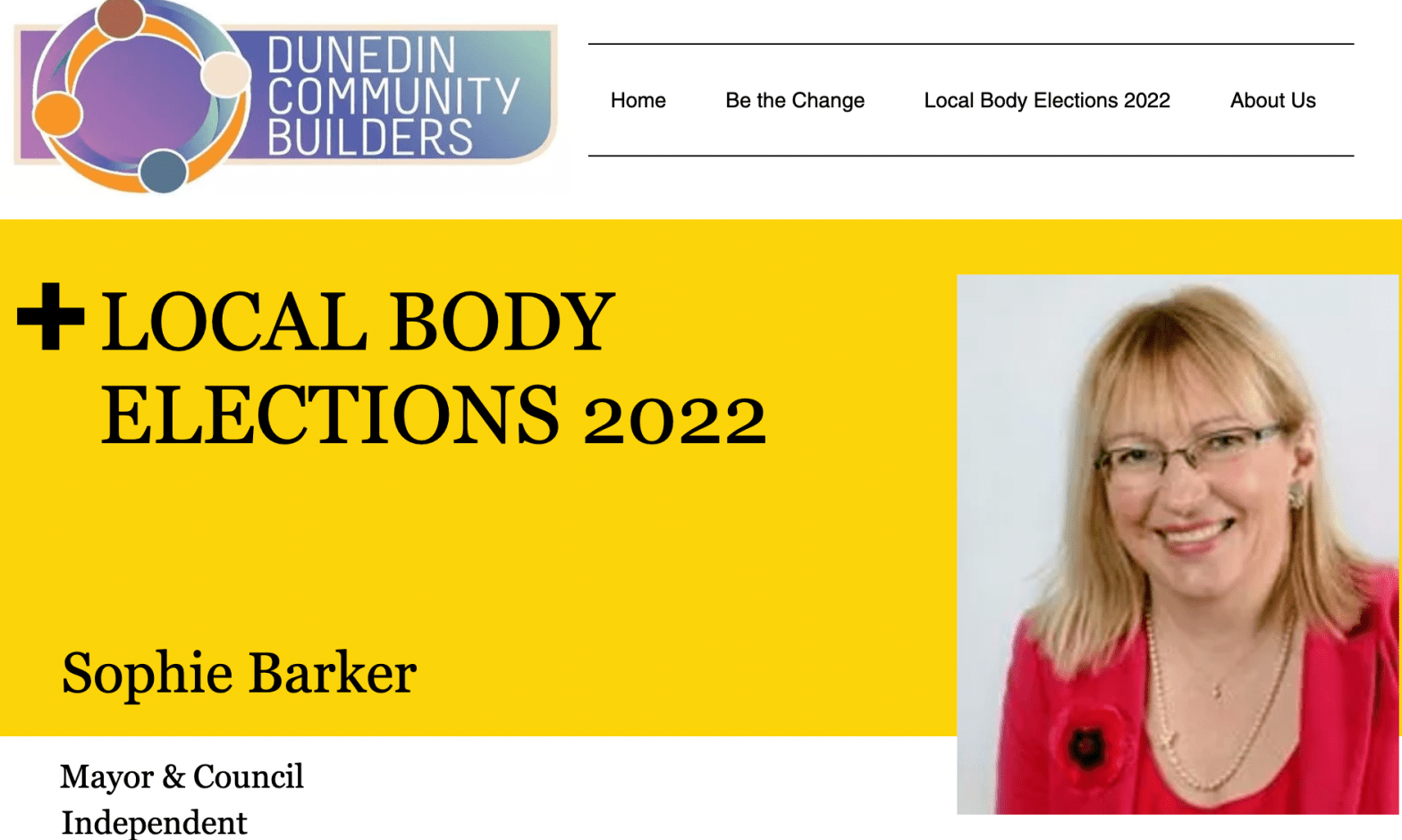
Which communities will you speak for and about at the council table?
Once elected, Councillor’s role is to speak for and advocate for all communities.
Looking around the current Council table it is obvious that Council is not fully representative of all communities, so its our responsibility to ensure all voices are heard, especially those whose lives are going to be affected by the decisions Council makes.
I always thoroughly read the reports we are presented with and check by asking particular questions as to whether communities have been consulted. I also embed myself in my community networks (women, business, tourism, conservation, heritage etc) plus attend all the meetings I can to ensure I am aware of community issues plus also to help them understand the council system and how they might best have their say.
My particular interests are stronger communities, sustainability, environment and economic opportunities.
What is the number one social and economic issue for the community and for the city? (DCC question). What is the key issue for the region at this time and for the next 10 years? (ORC question)
The biggest issue is Climate Change Action. We have been slow to respond and to plan for a sustainable future. This impacts on planning, housing and the very essence of our city. I want to see Dunedin at the forefront of planning for climate change to ensure our communities a safe future.
Housing is at the forefront of an immediate action we can take – affordable, safe housing for everyone should be our number one goal. We are addressing this through the housing action plan and the $20 million Council housing I also voted for in our budget.
How will you elevate community aspirations? How will you know what they are? (DCC question only)
The most important thing we do is deliver community aspirations. I want to ensure these are embedded in the new Council Strategic Suite – but I also want to ensure that our current Social Wellbeing Strategy is delivered. It has not been followed, which, in my opinion, has led to Dunedin falling behind on delivering community outcomes.
We need to engage with our community on a specific project to understand the needs of all our communities and build a new vision together. One thing that excites me right now is work being done with community groups around aspirations for our future tourism. I’d like to see this work expanded to all communities. Many communities want different things for their area/people.
Personally I engage as much as I can with different people and communities. I get out into networks, talk to as many people as I am able and hold weekly ‘clinics’ that anyone can grab a time to chat with me.
Under the Local Government Act 2002, councils are required to maintain and improve opportunities for Māori to contribute to local government decision-making processes. How will you honour this obligation in your role with the Dunedin City Council/Otago Regional Council?
Māori especially mana whenua are our respected treaty partners. We need to work to build better relationships and better decision making together.
I voted for mana whenua representatives on two Standing Committees of Council. I would like to have mana whenua representatives on all committees as I believe it leads to more robust decision making and would ensure that instead of a tick box exercise on our papers, that mana whenua are actively partnered in our discussions and decisions.
Council is currently working on a Māori Strategic Framework, which I believe will embed a te ao Māori world view into our Council planning. Council also is committed to the Māori Participation Working Party, which I have ensured that now all Councillors have been invited to, and have access to the agendas etc as previously this was restricted to Council Chairs. I have also advocated strongly for cultural competence training for Councillors as I consider this vital to understanding tikanga and te ao Māori and building understanding and respect.
Personally I am learning Te Reo Māori and also volunteer at Blue Penguins Pukekura, a Korako Karetai Trust partnership.
What is your usual approach to achieving collegial and constructive relationships with the people you work with? What is the most important element of a constructive working relationship?
Trust and respect are the most important element of a constructive working relationship. They are intertwined and the building blocks of working relationships.
I respect that everyone has a viewpoint and brings different world views, skills and life experiences to the table. From sharing those views respectfully we build trust and confidence – and then agreed actions. I like to share a vision that everyone feels involved with then build the team to achieve the outcomes we want. I lead by example as a committed hardworking person and this perculates through teams that I work with. I also like to have a friendly, creative environment where people can flourish and enjoy our work together.
The DCC’s place-based community fund has been a game changer for community-led development and growing connected and resilient communities in Ōtepoti. What more will you do as a councillor to support community development in the city? (DCC candidate question only)
I will focus on delivering the Social Wellbeing Strategy, which in my opinion has been sadly neglected. This strategy specifically focuses on community wellbeing and many of the key actions haven’t been delivered.
I would like to see a joined up approach to community development – with a well resourced community development team inside council working with community leaders to ensure that all communities within Dunedin achieve their aspirations. Currently I consider there is a piecemeal approach to community development.
The DCC Grants need to be reviewed (which is part of the Social Wellbeing strategy) to ensure that the grant streams are targeted towards communities’s desired outcomes. I’d also like to see service level agreements in place for many of the grants we have so the pressure can be taken off the groups going through the grants processes, which is difficult, time consuming and takes up valuable time which would be spent with the community.
 Sophie Barker Mayor of Dunedin